BSEU on the way to achieving the Sustainable Development Goals
Belarus State Economic University on the way to achieving the Sustainable Development Goals
About the Belarus State Economic University
The Belarus State Economic University is the leading economics university in the Republic of Belarus and a major research center in the field of sustainable development economics. The university makes a significant contribution to the training of specialists and scientific research in this field. The Belarusian State University of Economics actively integrates sustainable development principles into its core activities, including education, research, ideological and educational activities.
We prepare future leaders capable of addressing global challenges and building a prosperous, equitable, and environmentally sustainable future.
We prepare future leaders capable of addressing global challenges and building a prosperous, equitable, and environmentally sustainable future.
Mission
The mission of the Belarus State Economic University in the context of achieving the Sustainable Development Goals is to integrate sustainable development principles into all aspects of the university's activities to foster a highly educated, socially responsible, and environmentally conscious generation capable of ensuring sustainable economic development, improving the quality of life, and preserving the environment through high-quality education, innovative research, and practical solutions.
Vision
To become a leading educational and scientific platform in the region, a recognized center of excellence in sustainable development and the circular economy, contributing to the achievement of the SDGs at the national and global levels.
Our priorities within the Mission in the context of achieving the Sustainable Development Goals:
- Integration of SDGs into the educational processIntegrating sustainability principles into curricula, disciplines, and extracurricular activities to develop students' sustainable thinking and global responsibility.
- Development of scientific research activitiesSupport for research projects aimed at solving socio-economic and environmental problems in line with national sustainable development priorities.
- Formation of sustainable competencies in studentsProviding training for specialists capable of developing and implementing sustainable development strategies in various economic sectors.
- Promoting inclusion and equal opportunitiesCreating conditions for equal access to education, leadership development, and engagement for all students, regardless of gender, social status, or health status.
- Environmental responsibility and sustainable resource managementImplementation of initiatives to reduce the university's environmental footprint, rational use of resources, and the development of an environmental culture among students
- Partnership and interactionDeveloping cooperation with government agencies, businesses, international organizations, and other universities to jointly implement SDG projects.
- Information transparency and educationConducting information campaigns, thematic events, and publishing materials about the SDGs on BSEU's official platforms to improve the environmental awareness of students and staff.
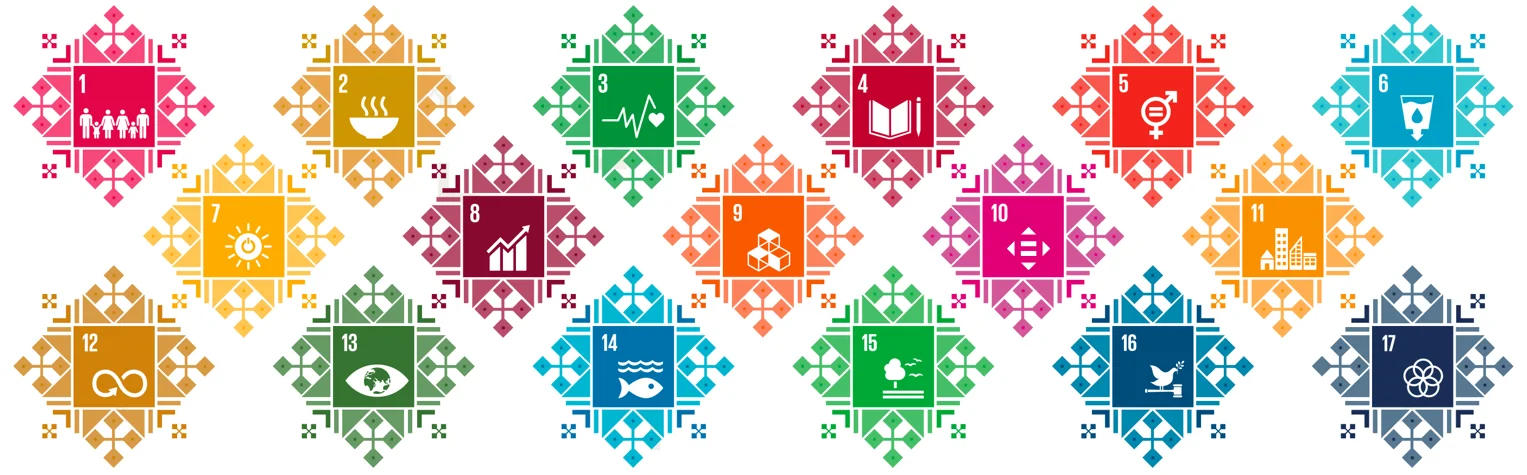
The University's contribution to achieving the SDGs
The Belarus State Economic University supports the achievement of global sustainable development goals.
- SDG 1: Poverty eradication
Despite the fact that extreme poverty has been completely eliminated in the Republic of Belarus, comprehensive support for vulnerable categories of citizens remains relevant. The Belarus State Economic University conducts research and implements programs dedicated to combating poverty and economic inequality. Various educational events on financial literacy of children and youth are held annually on the basis of the University and the BSEU Law Clinic in order to enhance the culture of financial behavior. Financial assistance is provided to employees, and a scholarship from the university council is awarded to students.
- SDG 2: Ending hunger, ensuring food security and improving nutrition
The achieved level of own production of agricultural raw materials and foodstuffs in the Republic of Belarus makes it possible to guarantee the physical availability of a healthy diet for the population. The Belarus State Economic University contributes to achieving zero hunger and ensuring food security through education, science and sustainable practices. Issues of food security, sustainable agriculture and rational use of resources, including specialized modules on agricultural economics, food logistics and supply chain management, are integrated into the training courses of the university's ongoing educational programs. Thematic lectures and seminars are organized with the involvement of experts in the field of the food industry. The University continues to develop educational and research programs aimed at addressing food security issues through economic approaches and sustainable practices. Scientific research is being conducted to study the economic aspects of food security in the Republic of Belarus, the efficiency of agricultural production and the development of economic optimization models, issues of reducing food losses and waste in logistics chains. In university canteens and catering facilities, staff and students are provided with access to healthy food.
- SDG 3 – Good health and well-being
The Republic of Belarus has achieved a high level of development of the healthcare system, as evidenced by some of the lowest maternal, infant and child mortality rates in the world. The Belarus State Economic University contributes to the promotion of health and well-being through economic research, educational programs and the development of corporate culture. The University's scientists conduct research in the field of human resource management in the field of healthcare, the development of economic models for financing healthcare and social insurance, and the impact of socio-economic factors on public health. The University continues to develop programs aimed at improving public health through the training of specialists and the creation of a healthy environment. Specialists with knowledge in the field of social insurance, pension provision, and sanatorium-resort business are being trained. Regular preventive medical examinations for students and staff, wellness activities and psychological relief programs are organized. Efforts are being made to create an accessible environment for people with disabilities. Various sports events are held and physical activity is promoted. Volunteer support programs for the elderly and people with disabilities are being implemented.
- SDG 4 – Quality Education
The right to free education is ensured in Belarus, which directly affects the maintenance of a high level of education of the population. The Belarus State Economic University makes a multifaceted contribution to providing quality education through the following strategic directions: development of the educational ecosystem; innovative educational technologies; research excellence; accessibility and inclusivity; continuing education. The University continues to strengthen its position as a leading educational and scientific center providing quality education through innovation, research and social inclusion. More than 170 training courses include SDG-related components. The International Youth Environmental Festival "Green Fest", scientific and practical conferences with the participation of leading foreign experts are held annually. Digital educational resources and platforms for blended learning have been introduced, and interactive teaching methods are being used. Scientific schools and research centers dealing with current economic issues are supported. The university's scientists publish their research results in international and national scientific publications. Academic mobility and international cooperation programs are being developed. Professional development programs are organized for teachers and staff, managers and specialists, courses for applicants and preparatory departments, educational projects for schoolchildren and youth.
- SDG 5 – Gender equality
The Republic of Belarus implements a targeted policy based on respect for national interests, taking into account generally recognized principles of international law and human rights, and support for traditional values and cultural foundations of the Belarusian society. Special attention is paid to the issue of gender equality, increasing the role of women in all spheres of society. Belarus ranks 27th out of 172 countries in the Gender Inequality Index. The Belarus State Economic University makes a systematic contribution to achieving gender equality through education, research and corporate policy. The University continues to develop programs aimed at eliminating gender imbalances through education, research, and the creation of an inclusive environment, contributing to building a more equitable society. The key areas of the university's activities in this area are: educational initiatives; research activities; internal policy of the university; social projects and partnerships. The academic disciplines "Gender studies in economic, political and socio-cultural spheres", "Psychology of gender relations", etc. are integrated into the educational programs. International scientific and practical events on gender balance in the professional sphere and human rights are organized. Research is being conducted on gender inequality in the Belarusian labor market, the economic consequences of the gender pay gap, the role of women in entrepreneurship and corporate governance, and the development of methods for assessing the gender impact of economic policies. The university ensures equal opportunities for career growth of employees regardless of gender, and gender balance in the university's governing bodies. More than 67% of university leadership positions are held by women, and more than 50% are members of the university council.
- SDG 6 – Clean Water and Sanitation
In the Republic of Belarus, special attention is paid to improving the efficiency of resource use in a changing climate and creating conditions for the conservation of aquatic ecosystems. In the National Strategy for Water Resources Management in the Context of Climate Change for the period up to 2030, this task is one of the priorities for ensuring sustainable economic growth in the country. The Belarus State Economic University makes a systematic contribution to solving water problems through economic research and sustainable management in the following key areas: educational initiatives; research activities; sustainable university management. The University continues to develop an integrated approach to water resources management, combining educational programs, applied research and practical solutions to ensure sustainable water use. Issues on the economics of water resources, the legal regulation of their protection and use are integrated into the academic disciplines "Economics and management of resource conservation", "Economics of Environmental management", "Environmental Management", "Environmental law", "Natural Resource law". Scientific and research work is underway to develop ecological and economic aspects of the use and protection of water resources, rational use of water resources, systems for assessing the natural resource potential of the state, statistical assessment of the state of atmospheric air and water resources in the Republic of Belarus, and legal regulation of wetland monitoring. Water consumption monitoring systems have been implemented, water-permeable coatings and storm water systems are used for natural irrigation of green areas.
- SDG 7 – Affordable and Clean Energy
In the Republic of Belarus, a 100% level of providing the population with access to electricity has been achieved, and its consumption is ensured by production at its own power plants, in addition, a project has been implemented to build a nuclear power plant "NPP - 2006" generation 3+, which has significantly expanded the range of electricity applications. The Belarus State Economic University continues to develop an integrated approach to solving energy challenges, combining academic training, applied research and practical implementation of energy-efficient technologies. The University makes a multifaceted contribution to the development of affordable and clean energy through the following strategic areas: educational initiatives; research activities; sustainable university management; student initiatives. The educational programs include integrated courses aimed at training specialists with knowledge in the field of energy and resource conservation. Research is underway on the issues of ensuring energy security, innovative development of the energy economy, the fuel and energy complex of Belarus, green and alternative energy, economic instruments to stimulate renewable energy, assessment of the potential of renewable energy sources, the formation of tariff policy for energy resources, public energy management, etc. The buildings of the university campus have been modernized by gradually replacing traditional lighting with LED. Elements of intelligent energy monitoring have been introduced in order to increase the energy efficiency of university buildings. Discussion platforms dedicated to energy economics are held with the participation of scientists and university students. Students have successfully participated in various competitions of innovative projects (100 Ideas for Belarus, InPro, etc.).
- SDG 8 – Decent Work and Economic Growth
Belarus ranks 65th in the Human Development Index, with an unemployment rate of 3.1% for the working-age population and 84% for the working-age population. The Belarus State Economic University, acting as a key supplier of highly qualified personnel for the national economy and a center for developing strategies for sustainable economic growth, makes a systematic contribution to ensuring decent work and economic growth through the following key areas: educational initiatives; career support; research activities; entrepreneurial initiatives; partnership with employers. Dual degree programs are being implemented with leading foreign universities (China, Russia). The Belarus State Economic University, specializing in economics and management, develops courses on the modern culture of personnel management, corporate social responsibility and entrepreneurship. As part of the educational programs, academic disciplines have been introduced that explore modern approaches to HR management, labor motivation, creating decent working conditions and developing organizational culture. Courses and seminars are organized to improve financial literacy and the basics of entrepreneurship. The University actively cooperates with leading national and foreign companies, providing students with internships and internships. Students of the Faculty of Law, as part of the Student Legal Consultation under the guidance of experienced mentors, provide free legal assistance to the public and businesses, gaining invaluable practical experience. The university's scientists conduct systematic scientific research in the field of public employment policy, employment problems in the digital economy, inclusive employment, non-standard and overemployment, the development of strategies for the development of human capital, monitoring and forecasting the needs of the labor market in Belarus. The University educates students in entrepreneurial skills by encouraging innovative and business projects. The annual competition of business ideas and projects "Market of Ideas", the practice-oriented educational project "Plunge into business!", Job fairs with the participation of representatives of organizations that order personnel, etc. are held. More than 90 cooperation agreements have been signed with the country's leading enterprises.
- SDG 9 – Industry, Innovation and Infrastructure
Belarus industry ranks 58th out of 153 countries in the world Competitiveness Index ranking. The course towards building an IT country and the transition to a digital economy is being successfully implemented, with a focus on the development of the IT industry and global trends in electric mobility. The Belarus State Economic University continues to develop an innovative ecosystem that promotes technological modernization of the economy and the creation of sustainable infrastructure through training, research and practical development, and makes a significant contribution by acting as an intellectual and personnel center providing scientific justification, economic support and management support for the processes of industrialization, innovative development and the creation of sustainable infrastructure in the Republic. Belarus. The educational programs integrate disciplines on innovation management, project management, digital business transformation, financing and lending of investment projects, as well as evaluating the effectiveness of the introduction of new technologies. University scientists are investigating the investment attractiveness of infrastructure projects, developing economic models for the digital transformation of industry, analyzing the effectiveness of public-private partnerships in the innovation sector, methods for assessing the economic impact of the introduction of new technologies, problems of increasing the competitiveness of national industry and the development of import substitution, financial and institutional mechanisms to support innovation, etc. Student startups are supported through business incubators and competitions for innovative projects. A cooperation agreement has been signed between the Belarus State Economic University and the Belarusian Innovation Fund.
- SDG 10 – Reduced Inequalities
The Republic of Belarus provides a high level of social support, as well as income redistribution through the state support system, which leads to relatively low income inequality in comparison with other countries of Eastern Europe and the CIS. The Belarus State Economic University continues to develop programs aimed at creating equal opportunities and reducing socio-economic inequality through education, research and social integration. The University makes a systematic contribution to reducing inequality through the following key areas: educational accessibility; scientific research; educational initiatives; inclusive environment; social projects. A set of measures is being implemented to ensure the accessibility of higher education, including providing places in dormitories, reducing tuition fees, and awarding scholarships to the university council. Research is underway on the problems of economic inequality in Belarus, access to education and healthcare for various social groups, the development of methods for evaluating the effectiveness of social programs, and research on labor migration and its impact on labor markets. Graduates receive competencies that enable them to work on creating a fair tax system, effectively allocating budget funds to social needs, and developing socio-economic development programs aimed at reducing gaps between different population groups. Measures are being implemented on a step-by-step basis to create an accessible environment in academic buildings and dormitories. Programs of psychological support and social adaptation of students are supported. Students are involved in volunteer projects and initiatives ("Our concern is for veterans"; "Our children"; "Care"; "House of Saved Souls"), etc. Cooperation has been established with public organizations in the implementation of social initiatives (the Belarusian Red Cross Society, the Republican Volunteer Center, etc.). The University conducts educational events and courses aimed at improving the financial literacy of the population.
- SDG 11 – Sustainable Cities and Communities
In the Republic of Belarus, programs to improve the level of housing improvement and the Smart Cities of Belarus project are being implemented on a permanent basis at the state level in order to reduce inter-regional differentiation in terms of the level and quality of life of the population. The University continues to develop expertise in the field of sustainable urban development, combining academic training of specialists, applied research, and makes a systematic contribution to the creation of sustainable cities through the following areas: educational initiatives; scientific research; practical projects. The University trains personnel capable of developing and implementing strategies aimed at creating inclusive, safe, and sustainable cities. The courses "Socio-economic development of cities and towns" and "Urban civilization in Belarus" have been introduced into the educational programs. Scientific research is conducted on key areas of regional and urban economic development, the development of economic models for urban management and the development of modern cities, the analysis of the efficiency of urban resources and infrastructure, the analysis of tariff policy, energy conservation mechanisms and modernization of municipal infrastructure, etc. Student initiatives and innovative projects are supported, and students successfully participate annually in the BizTech BSU StartUp Contest (the project "Warm House: heating apartment buildings using sewage pipes").
- SDG 12 – Responsible Consumption and Production
Belarus is vigorously implementing government initiatives aimed at the transition to an environmentally friendly and cyclical economy, contributing to a significant reduction in the negative impact on the environment by increasing the efficiency of materials processing at each stage of production and provision of services. The Belarus State Economic University demonstrates leadership in promoting the principles of circular economy, combining educational programs, scientific research and practical solutions to reduce the environmental footprint. The University makes a multifaceted contribution to ensuring responsible consumption and production patterns through the following areas: educational activities; scientific research; practical initiatives on campus; partnership projects. The University trains personnel capable of implementing the principles of the "green" economy and circular production at all levels — from enterprises to public policy. The educational programs include the academic disciplines "Ensuring sustainable development and resource efficiency of the organization", "Sustainable development". Within the framework of the master's degree, the specialization "Green Economy and management of resource-saving activities" has been opened. University scientists are developing problems of greening production and environmental management, the development of digital and circular economy, methods for assessing the environmental and economic efficiency of production, analyzing value chains from the perspective of sustainable development, researching the markets of secondary resources and recycling in Belarus, the economic justification for the introduction of environmental standards, etc. The University has incorporated the international 3R principles (reduction, reuse, recycling) as a core component of its sustainable development strategy, implementing a range of initiatives for efficient waste management, including the introduction of a separate waste collection system, programs to reduce the use of single-use plastic in retail and catering facilities, centralized collection of waste paper and electronic waste.. The participation of students and staff in the annual environmental campaign "Forest Week" has been organized. Through the educational process and extracurricular activities, the university forms a culture of responsible consumption among students, an understanding of the life cycle of goods and personal responsibility for the state of the environment.
- SDG 13 – Combating climate change
Electric transport is actively developing in Belarus and the necessary infrastructure is being expanded, and efforts are being made at the state level to reduce greenhouse gas emissions. The country occupies one of the leading positions in the restoration of swamps, which contributes to the reduction of greenhouse gas emissions. The Belarus State Economic University continues to develop an integrated approach to addressing climate challenges, combining economic research, educational programs and practical measures to reduce climate impacts. The University is introducing courses on green economics, low-carbon economics, carbon regulation and taxation, and sustainable finance (ESG) into its curricula. This prepares a new generation of economists and managers who are able to make strategic decisions taking into account environmental impacts and climate risks. The University initiates and conducts research projects aimed at economic analysis of the effects of climate change, estimating the cost of greenhouse gas emissions, modeling the transition to renewable energy and developing business incentive mechanisms for the introduction of eco-friendly technologies. Through the educational process and extracurricular activities, the university forms students' corporate and personal social responsibility, understanding how anthropogenic factors, including economic activity, affect the ecosystem, and what management decisions can mitigate this impact.
- SDG 14 – Conservation of marine ecosystems
Belarus is located in a region where rivers belong to the drainage basins of two seas at once — the Baltic and the Black. Despite the lack of direct access to the seashores, the country plays an important role in maintaining the ecological balance of these seas, carefully protecting the international rivers flowing through its territory. The University continues to develop economic approaches to solving problems of conservation of aquatic ecosystems, combining academic research, educational programs, and contributes to the conservation of marine and river ecosystems. Within the framework of educational programs such as "Economics and Management at the enterprise", "World Economy" and "Marketing", issues of rational use of natural resources, economic assessment of damage from pollution of water bodies and cost-benefit analysis of environmental protection measures are studied. This trains specialists who are able to calculate the economic feasibility of projects that affect aquatic ecosystems. University scientists are analyzing the effectiveness of green financing mechanisms, ways to minimize the negative impact of enterprises on the environment (including water resources), and developing circular economy models that reduce waste and pollution entering reservoirs. Specialists of the Faculty of Law, who train personnel with knowledge in the field of environmental and land law, study and improve legal mechanisms for the protection of water resources. This includes issues of compliance with the Water Code of the Republic of Belarus, international agreements on transboundary watercourses and legal regulation of liability for pollution.
- SDG 15 – Protect terrestrial ecosystems
Belarus is one of the most forested European countries, holding a leading position among continental nations in terms of forest area covering over 40% of its total territory. Key areas of nature conservation include protection and rational use of peat bogs, along with maintaining zero levels of soil degradation. The university continues to develop economic approaches towards solving issues related to terrestrial ecosystem preservation through academic research, educational programs, and active participation in environmental initiatives. The Belarusian State Economic University makes systematic contributions to land-based ecosystem conservation across several key directions: educational programs, scientific research, and practical initiatives. Educational curricula integrate disciplines linked to sustainable development, environmental management, environmental impact assessment, and corporate social responsibility. These prepare future economists and managers who understand biodiversity's value and can make decisions minimizing negative impacts on terrestrial ecosystems.
At the Faculty of Law, specialists trained in environmental law, land legislation, and natural resource management graduate annually. Scientific studies focus on issues such as the economic efficiency of environmental measures, evaluation of ecosystem services provided by forests and other natural objects, and development of business incentives for adopting resource-saving technologies.
Through both formal education and extracurricular activities, the university fosters awareness among students regarding their individual and professional responsibilities toward preserving Belarus' nature. This shapes future leaders and professionals committed to sustainable resource utilization and safeguarding the country's natural capital.
- SDG 16 – Peace, justice and effective institutions
According to sociological monitoring data, there is a high level of public safety in the Republic of Belarus, and there is a tendency towards a decrease in premeditated murders. The country is countering the illegal movement of children and corruption, following generally recognized principles and norms of international law. The University continues to strengthen its role as a competence center in the field of anti-corruption policy and legal education, contributing to the creation of transparent and effective institutions in Belarus. The Belarus State Economic University makes a multifaceted contribution to strengthening legal institutions, fighting corruption and building an inclusive society through the following areas: educational initiatives; scientific research; practical projects; internal institutional policy. The University trains lawyers specializing in financial, economic and international law, as well as in law enforcement and combating economic crime, and specialists in public administration. Graduates work in law enforcement agencies, courts, prosecutor's offices and legal services of companies, in government agencies and organizations. In-depth research is being conducted in the field of combating corruption, the shadow economy, money laundering and ensuring the economic security of the state. The methods and recommendations developed by university scientists are used by government agencies to improve legislation and law enforcement practice. The University follows the principles of academic integrity and has internal procedures to ensure transparency of the educational process and scientific activities. In order to develop practical skills, the Faculty of Law has been operating a Student Legal Consultation for more than 20 years, where students provide legal assistance to certain categories of citizens, as well as provide advice on issues related to environmental law. The University implements additional education programs and holds events (conferences, seminars, round tables) on topical issues of law, economic security and anti-corruption for representatives of the state apparatus, business and the academic community, thereby spreading advanced knowledge and strengthening the potential of state and public institutions.
- SDG 17 – Partnership for Sustainable Development
Belarus is implementing a number of measures aimed at integrating the principles of sustainable development. A special structure has been created to coordinate the process, including the National Coordinator for Achieving the Sustainable Development Goals, the Council for Sustainable Development, intersectoral groups, regional sustainable development groups, the Sustainable Development Partnership Group, the Parliamentary group for Sustainable Development, etc. The National Strategy for Sustainable Development serves as the fundamental document defining long-term goals. The Belarus State Economic University continues to strengthen its role as a competence center and platform for multilateral dialogue, contributing to the implementation of the 2030 Agenda for Sustainable Development. The University makes a key contribution to strengthening global partnership through the following strategic areas: international academic cooperation; partnership with government agencies; cooperation with the business community; research collaborations; public initiatives. BSEU is developing a partnership network with leading universities and research centers in the near and far abroad (Armenia, Azerbaijan, Kazakhstan, Kyrgyzstan, China, India, Russia, Serbia, Tajikistan, Turkmenistan, Uzbekistan.
-
 Scientific researchConducting research in the field of sustainable development economics and publishing scientific articles.
 - ProjectsImplementation of projects aimed at introducing sustainable development principles into the economy.
-
 International cooperationCollaboration with international partners to exchange experiences and implement joint projects in the field of sustainable development.
Student initiatives
Launching initiatives to raise awareness of the Sustainable Development Goals among students and faculty.
News
News about the Belarus Economic University and its sustainable development. Follow updates on the website.

Events at the University
Information about events and activities taking place at BSEU.
Achievements in sustainable development
News about BSEU's achievements within the framework of sustainable development and the national strategy.

Scientific research
Information on new research and projects in the field of sustainable development economics
Our partners
Organizations with which BSEU cooperates to achieve sustainable development