

2.07.2026
Svetlana Matalytskaya: "There's no universal code for success; there's strategy and professional management"
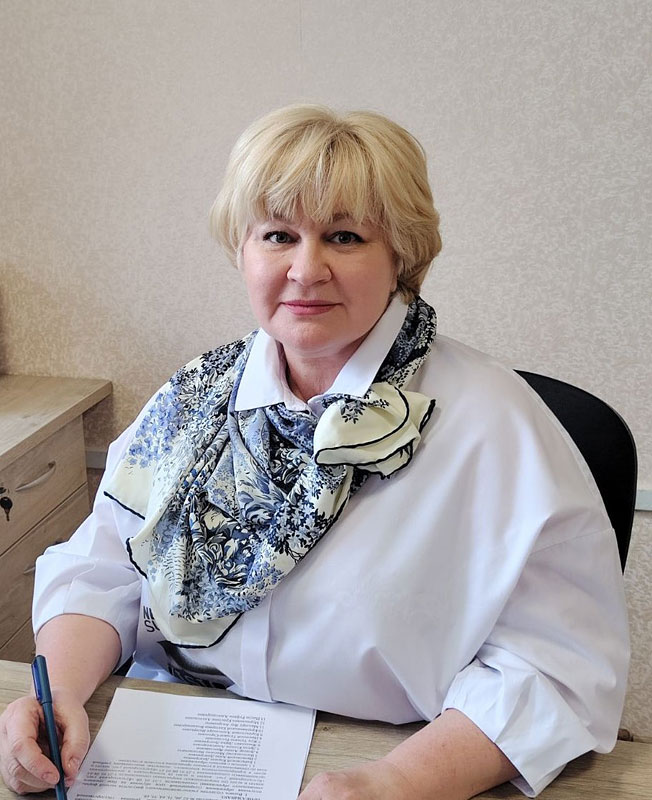
The BGEU Faculty of Accounting and Economics is not only a training ground for talent for the country's financial system, but also a platform where academic traditions meet the challenges of the digital reality. We spoke with Svetlana Konstantinovna Matalytskaya, Dean of the Faculty of Accounting and Economics, PhD in Economics, and Associate Professor, about how the role of accountants and analysts is changing in the age of artificial intelligence, what "code for success" Belarusian companies require, and how to combine faculty leadership with active research and volunteer work.
— Svetlana Konstantinovna, your research focuses on the digitalization of accounting. Many are now saying that neural networks are on the verge of displacing accountants and auditors. How real do you think this threat is, and how is the "portrait" of the ideal economist changing in the digital economy?
— It's an interesting question, but there's no definitive answer—much depends on one's perspective. Today, I see artificial intelligence as an excellent assistant for accounting, analytical, and control functions. It significantly reduces the labor costs of specialists performing routine operations, processing standardized data, and identifying common errors. However, the work of a modern accountant as an important part of the management system goes far beyond monotonous labor. It requires professional judgment, expert consulting, and the solution of highly specialized and non-standard problems that directly impact business performance. And here, unique human experience and competencies continue to play a key role.
On the other hand, the rapid implementation of artificial intelligence in the business environment is an irreversible process, as AI algorithms are constantly improving. In my opinion, this trend will lead to a significant transformation of professional competencies in most fields. Accountants, auditors, and economists will be the first to adapt to these new standards.
What is the portrait of an "economist"? The future will see a transformation of the profession, a new hybrid approach of "Specialist + AI." The future belongs to new specialists who can analyze financial data, manage technologies, oversee digital systems, and provide advice on accounting and reporting. Accountants will become the foundation of digital accounting with automated processes and human management, and their role as task managers for digital system development will grow.
— As a specialist in organizational performance analysis, what specifically helps Belarusian companies survive and grow in a highly competitive environment? Is there a universal "economic code for success" for a modern enterprise?
— Belarusian organizations are forced to adapt to a new reality. To ensure financial stability in a rather volatile market, Belarusian businesses must constantly revise their strategies and business models. Difficulty in long-term and even medium-term planning creates certain difficulties in both defining and achieving performance indicators, which are important for any business. In my opinion, there is, unfortunately, no "single universal code for success." Too many factors influence business results: from the industry, the technologies used, the specifics of the product, to the professionalism, motivation, and coordination of employees. The most effective approach is "diagnosis - search for alternatives - scenario planning - strategy development." And, of course, professional management. The absence of a strategy will lead to capital drain. I believe this is the direction our Belarusian organizations should take.
— You've authored around 200 works, including textbooks approved by the Ministry of Education. How difficult is it to write academic literature, given how rapidly information technology and legislation are changing?
— Working with material while preparing a manuscript is the area that brings me professional satisfaction as a teacher. Working on a manuscript in the accounting field is much more challenging than one in the analytical field. Accounting has a fairly fluid legal framework; everything changes, and the author, no matter how much they might want to, is limited by the regulations of regulatory legal acts within the framework of their developing competencies. Creativity is more often found in practical examples. Working on a manuscript on the analysis of the economic activities of organizations is a completely different story for me. Here, I have the opportunity to explore my own models, conduct a comparative analysis of modern theory and practice, and utilize the scientific approaches of Belarusian scholars and practitioners, as well as foreign economists. It's gratifying when students use this in their research when preparing coursework, theses, and research papers.
— Your faculty recently received an award from the Republican Volunteer Center. Could you tell us more about this?
— Thank you very much to the Republican Volunteer Center for their high recognition of the faculty's volunteer movement. Our collaboration began when Victoria Akulich invited students in her supervisory group to participate in a collection of items for low-income and socially vulnerable groups in the Republic of Belarus under the auspices of the Belarusian Charity and Health Foundation. This initiative resonated with students throughout the Faculty of Accounting and Economics. Over time, these events became a regular occurrence at the faculty, and the collaboration between the dean's office, the supervisor, and the foundation grew into a partnership. Students from the faculty provided assistance to the staff of the nursing and palliative care department at the hospice for a year. Another area of volunteer work is helping animal shelters, organizing collection drives for items and food.
— Accounting is a conservative field. How do you find a balance between strict academic traditions and the innovative methods offered by young faculty and students?
— I think this is a conservative approach to accounting. The accounting system generates information on all business transactions and processes within an organization. And not only accountants but also managers at all levels of management, including senior management, must understand these information flows. Accounting is quite fluid! An accountant can tailor an information flow to the needs of any stakeholder, evaluate the information, participate in assessing proposed alternatives, and formulate management decisions.
— As for the second part of your question, regarding working with young people, I would like to point out that young people are the future of the faculty, the university, and the country. Graduates of the faculty are a driving force for innovation and social change not only in practice but also in research. As the Director-General of UNESCO said, "Education systems become strong only when they are shaped by those they serve." At the faculty, academic traditions and the innovative methods of young faculty complement each other harmoniously. The dean's office and department heads are happy to organize meetings at the faculty between representatives of the research and teaching school on accounting, business analysis, control, audit, and control with students who envision a future in science. Graduate and doctoral students from the faculty are also invited. This allows for the involvement of students and young scientists in the development of the faculty's educational policy.
— You are a scholar, a textbook author, and a faculty dean. How do you manage the faculty, balancing intellectual activity with administrative work? What is your main source of energy when you leave behind "numbers and reports"?
— Faculty management is a complex mechanism that operates thanks to a well-coordinated team. Working as chief accountant taught me planning, setting goals, finding the right tools to solve problems, and oversight. This also helps in faculty management.
V.A. Berezovsky, who served as dean for 20 years, built a strong faculty team, of which I, as department head, was a part. I am a man of tradition, but I see the future in movement, innovation, development of the specialty, and the formation of specialists of the future. Currently, my partners in faculty management are Deputy Deans O.V. Malinovskaya and A.L. Buev, who assist in organizing and overseeing the educational process, as well as social, ideological, and educational work. The driving force of the faculty is the departments! Department Heads D.A. Pankov, O.V. Golovach, and N.N. Kireenko support the implementation and development of educational, methodological, and research activities. Over the past two years, the faculty's well-coordinated team has implemented two BRFFR projects and two State Program for Scientific Research projects, and actively developed scientific collaboration with BGEU's international partner universities.
My research focuses on both research into the development of accounting and analytical mechanisms for business performance management and the supervision of graduate and master's students' research. My source of energy is relaxation. I enjoy both hiking in nature and driving around our country. I love theater; I have favorite productions that I watch several times. I enjoy theatrical premieres. I truly unwind with my family.
— Looking at students just starting out in their careers, what would you tell yourself when you were in their shoes, and what would you tell your students? What character traits or principles helped you achieve success?
— My parents taught me: if you take on a task and commit to it, see it through and do it well. If you realize you can't handle it, don't take it on and don't promise. If you have doubts, try, but put in maximum effort to achieve the result. I always follow this principle, wherever I work and whatever I do.
I wish young economists courage: don't be afraid to move forward, take responsibility for your decisions, and don't hesitate to learn from leading experts. And to first-year students, I wish them to be attentive and goal-oriented—then everything will definitely work out. After all, if a student ultimately surpasses their teacher, then the goal has been achieved. And for a mentor, this is the greatest reward.


International relations dep.
Tel.: (+375 17) 209-88-32,
e-mail: umoms@bseu.by
International students office:
Tel.: (+375 17) 209-79-71