

31.07.2026
More than just accounting: How Olga Falaleeva teaches future economists about business risks online
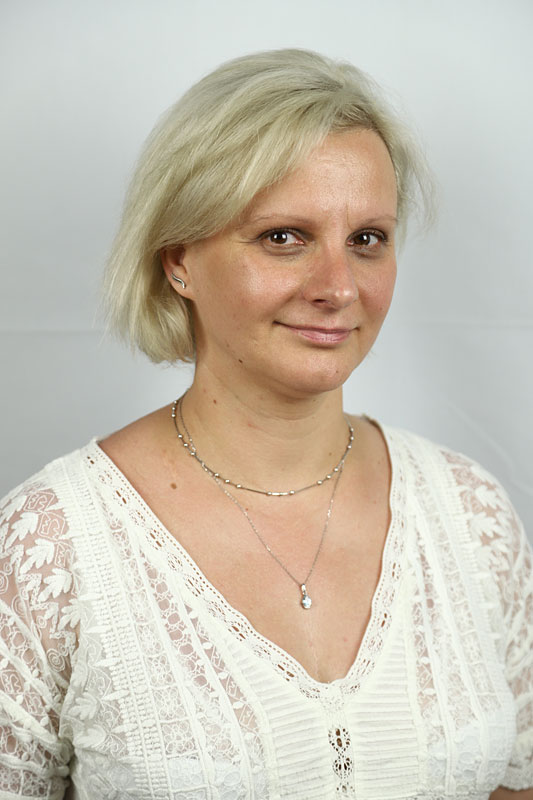
The accounting profession isn't just about crunching numbers; it's also the art of building strategic business processes. Olga Vladimirovna Falaleeva, Senior Lecturer in the Department of Accounting, Analysis, and Audit in Trade, Transport, and the Agro-Industrial Complex, proves that a modern professional must be an analyst, strategist, and innovator all rolled into one. In an interview, we discussed why accounting is the foundation of the country's food security and a career boost for ambitious graduates.
— Olga Vladimirovna, you successfully combine several responsible roles: senior lecturer, student group mentor, graduate student, and participant in a state research program. How do you maintain efficiency and find energy for all areas of your work?
— The secret is both simple and complex: it's time management and the ability to prioritize correctly, something my supervisors taught me. Furthermore, my family provides tremendous support—they're my "backbone" and my main source of energy. When you know your efforts are meaningful, fatigue gives way to a passion for results.
— You teach a fundamental course—Accounting Theory. What do you think is the most important takeaway for students from this course? What myths about the profession do you try to dispel in your lectures?
— Theory is the foundation without which a deep understanding of the subject is impossible. My task as a teacher is to demonstrate to students the logic of business processes through the "magic of numbers" and the structure of the chart of accounts.
As for myths, the main one is about boredom and monotony. Modern accounting is about analytics, strategic decision-making, and cost optimization. It's a highly dynamic profession: you need to constantly monitor changes in legislation and interact with management and government agencies. And, of course, it's worth dispelling gender stereotypes: accounting today offers broad career prospects for both women and men. Many successful financial directors and auditors are men.
— Your research interests include accounting risks. Do you think students understand the importance of this topic? Can you give an example of how a deep analytical approach can save an organization, for example, in the agricultural sector?
— The agricultural sector is a strategic industry that ensures the country's food security. Accounting here has its own specifics: it's important to understand biological cycles, seasonality, and the characteristics of biological assets.
A competent accounting and analytical system is the "eyes" of a manager. For example, we're analyzing feed costs in dairy farming. If an accountant or economist sees a decline in feed quality due to increased procurement and storage costs, they can mathematically justify the risk of falling milk yields and, consequently, increasing losses. It is precisely the deep analysis of accounting data that allows for timely risk diversification and optimization of business processes, ensuring the sustainability of the enterprise.
—You work with very specific industries—the agricultural sector and transportation. Do you have any students who consciously choose this development vector?
— Indeed. Industry specialization is a conscious choice for many students. They understand that deep fundamental knowledge combined with an understanding of the specifics of a particular industry—whether it's agribusiness, transportation, or logistics—makes a BGEU graduate a sought-after expert in the labor market. It's important to remember that today's accountant's workplace is a modern office equipped with computer technology, not a "field."
— You're a group mentor. What do you think is the most valuable advice for today's youth, and what do you learn from your students?
— My main advice is to value student friendships. The people you share this stage with often become a lifelong support. Regarding communication, I'm convinced that despite the "eternal generation gap," we teachers have much to learn from young people. They absorb new information at an incredible rate. My job as a mentor isn't so much to teach them about life as to help them channel their energy, provide guidance, and support during their personal development.
— Olga Vladimirovna, as an experienced practitioner, you are pursuing a postgraduate degree at BGEU. What prompted you to return to the classroom?
— A desire for development. The stereotype that "the time to study is over" is a barrier that hinders personal growth. I decided to shift my academic focus and delve into applied research, exploring new horizons. This experience helps me better understand students and the professional challenges they face. Fear of the unknown is natural, but overcoming it leads to a true professional breakthrough.
— You participated in the state research program "Society and Humanitarian Security of the Belarusian State." What is the role of accounting and analysis in ensuring this security?
— Any major research consists of small steps. In the context of the program, we worked on issues of business risk assessment and management. Accounting is a source of reliable information about the state of an organization. If a company operates stably, pays taxes, and grows, it contributes to the country's economic strength. A stable economy is the foundation of national security. Therefore, analytics isn't just dry numbers; it's a contribution to overall prosperity.
— How do you see the impact of digitalization and artificial intelligence on the accounting profession? Will it disappear in a decade?
— The profession won't disappear; it's transforming. Artificial intelligence is an excellent tool for automating routine tasks, but it can't replace the human intelligence that writes algorithms and interprets data. The main factor is legislation, which is constantly changing. Machines don't have the legal logic to assess the legality of transactions—that's what humans do. Digitalization is designed to free accountants from monotony, allowing them to focus on analytics and business development strategy.
— And the last question: what helps you avoid burnout and approach each new day with enthusiasm?
— My hobby is gardening. Perhaps it's my love for the land and the processes of growth that allows me to work so seamlessly with the specifics of the agricultural sector. I see real progress: if you compare a Soviet-era farm to a modern automated facility with smart sensors and computerized animal health monitoring, it's like night and day. Seeing such progress is inspiring. And when you work with passion and see the fruits of your labor, there's simply no room for burnout.


International relations dep.
Tel.: (+375 17) 209-88-32,
e-mail: umoms@bseu.by
International students office:
Tel.: (+375 17) 209-79-71