

3.09.2026
"Behind every number is a real economic process": an interview with Olga Bondarenko, a senior lecturer at BGEU
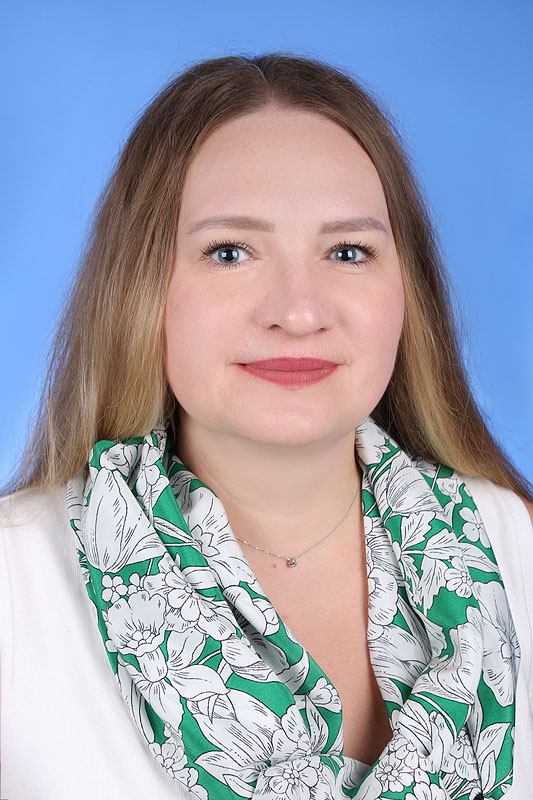
How can we make economics training as practical as possible and prepare them for the challenges of the modern market? Olga Bondarenko, senior lecturer at the Department of Accounting, Analysis, and Audit in Industry, shares her experience creating textbooks approved by the Ministry of Education, discusses her current research on optimizing accounting for small and medium-sized businesses, and explains why a university lecturer today is, first and foremost, a guide, helping students find the most important information in a vast field of information.
— Olga Alexandrovna, why did you choose accounting, analysis, and audit, and what eventually led you to teaching?
— I chose accounting because I've always been drawn to precision, as well as the ability to analyze organizations' activities through the lens of numbers. Over time, I realized that I enjoy not only working with data but also explaining complex concepts to others in an accessible way. Today, I see teaching as an opportunity to fully realize my potential: helping students master difficult subjects and build a strong foundation for their future careers in the industry.
— You've authored over 30 scientific and educational works, including manuals approved by the Ministry of Education. How are such publications created, and what is particularly important to you when preparing teaching materials?
— When working on teaching materials, I always rely on four main principles.
The first is accessibility. It's important for me to explain complex theoretical concepts in simple language without losing academic depth.
The second is practical focus. I always integrate real-world business cases and industry challenges into the curriculum so that students gain practical skills.
The third is structural logic. A textbook should be user-friendly: this includes a clear division into modules, visual highlights, summaries at the end of chapters, and glossaries for quick navigation.
And the fourth principle is relevance. Legislation and technology are changing rapidly, so materials require constant updating to reflect the realities of the modern economy.
— What principles do you adhere to in your teaching? How can you explain complex aspects of accounting to students so they see real economic processes behind the numbers?
— In my teaching practice, I rely on several key principles, such as systematic and logical presentation, connecting theory to real-world practice, gradually increasing the complexity of the material, and developing students' analytical thinking. I place special emphasis on visualization, using diagrams, tables, report fragments, case studies, and short practical exercises. My goal is to develop in students not just the technical skill of creating journal entries, but an understanding that accounting is the universal language of business. It's important that they see a real economic process behind each indicator, not just a dry entry in a spreadsheet.
— How important is it for an economics teacher to combine theory with practice and explore real-life business cases in class?
— For an economics teacher, integrating theoretical knowledge and practical experience is a key condition for high-quality teaching. Theory develops conceptual frameworks, while practice demonstrates their practical significance. Rote memorization of formulas without connection to reality does not develop professional competencies. An effective methodology requires a sequential mastery of tools: first, studying the theoretical framework, then analyzing case studies, where students learn to see real business processes behind the dry figures of financial statements. Assignments with incomplete data, which simulate the uncertainty conditions typical of real-life work, are especially valuable. This approach fosters systemic economic thinking, enabling students not only to make reasoned decisions but also to evaluate their long-term consequences.
— What research have you participated in?
— Previously, my research has been related to several areas. In 2018, I participated in a research project on "Justification of Shortcomings and Development of Recommendations for Developing Methodologies for Assessing the Creditworthiness of Industrial Organizations in the Republic of Belarus." In 2021, I participated in a research project on "Development of an Accounting Procedure (Instructions) for (Post-Based Accounting) of Industrial Waste (Including POP-Containing Waste) during Management, Including Use, Neutralization, Burial, etc." And in 2022, I completed a research project on "Development of Accounting and Analytical Support for the Activities of Consumer Cooperatives in the Republic of Belarus." In each of these areas, I examined the shortcomings of existing methods and proposed practical solutions important for Belarusian enterprises—from improving the accuracy of financial risk assessments to strengthening environmental responsibility through waste accounting and adapting accounting approaches to the specifics of cooperative activities.
— What research are you currently working on? Why did you choose this topic, and where can the results obtained find practical application?
— I'm currently working on a study titled "Improving the Accounting and Reporting System of Small and Medium-Sized Businesses as a Factor in Entrepreneurship Development in the Republic of Belarus." The goal of the study is to find ways to make accounting simpler and more efficient, which is critical for entrepreneurship development. Optimizing accounting processes will help small and medium-sized businesses reduce their workload and improve the quality of economic information, enabling them to make more informed management decisions. The results of the study will be useful not only for managers and accountants, but also for government agencies overseeing small and medium-sized business development.
— What knowledge and personal qualities do graduates most often lack today to confidently begin their careers in accounting and auditing?
— Today, graduates receive sufficient fundamental theoretical knowledge, as the university provides a solid foundation in accounting, analysis, and auditing. As a teacher, I see my role as helping students navigate the vast information landscape, identify relevant regulations, and separate what is truly important from what is unimportant. However, not all students manage to fully absorb and comprehend the information—much depends on personal qualities: responsibility, attentiveness, organization, a willingness to constantly learn and independently understand the material. Therefore, I strive not only to impart knowledge but also to help students develop the qualities that will enable them to confidently embark on their professional careers.
— What helps you maintain your interest in teaching and research? What kind of person are you outside of university, and how do you prefer to recharge?
— My students inspire me—it's incredibly rewarding to watch them grow, and to grow myself at the same time. And to avoid burnout, I switch to simple things: long walks, active recreation, and time with loved ones. Finding a balance between work and personal space is my main recipe for productivity and a passion for new projects.


International relations dep.
Tel.: (+375 17) 209-88-32,
e-mail: umoms@bseu.by
International students office:
Tel.: (+375 17) 209-79-71