

6.11.2026
For Accountant’s Day: Olga Golovach on Creative Freedom in Accounting, Mentors, and Today’s Students
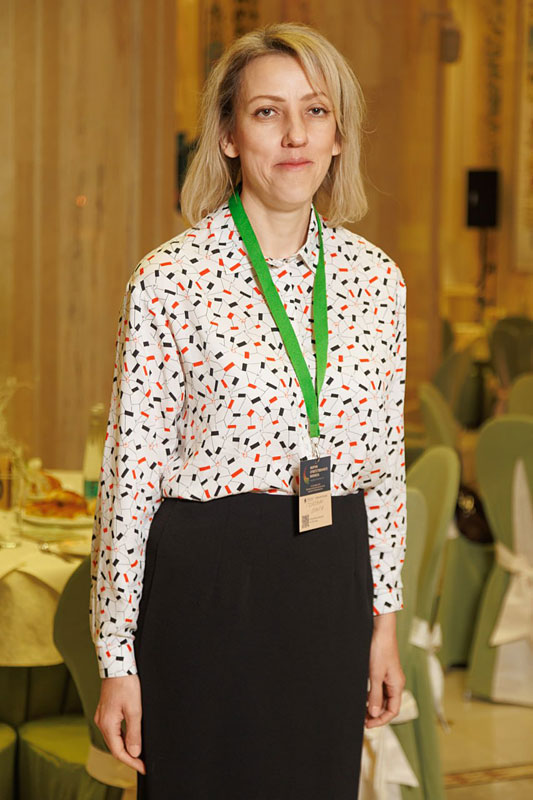
On Accountant’s Day, we celebrate those whose meticulousness and attention to detail underpin the financial well-being of businesses. Ahead of the holiday, we spoke with Olga Vladimirovna Golovach—Head of the Department of Accounting, Analysis, and Audit in Industry at the Belarus State Economic University (BSEU), Candidate of Economic Sciences, and Associate Professor. Olga Vladimirovna shared what keeps her passion for the field alive after all these years, what textbooks don’t teach, and the essential skills a modern accountant needs to possess.
— Do you remember the moment you decided to dedicate your life to accounting? What drew you to the profession back then?
— I chose this career in the mid-1990s—a time of rapid economic change, when a market economy was just taking shape and commercial enterprises were emerging. Back then, the accounting profession was in high demand; businesses needed specialists who understood and could document their internal economic operations. Accounting is essentially the information environment of a business. By studying accounting and financial reporting, one can trace the history of any company, identify its weaknesses and the challenges it faces, and pinpoint opportunities for growth and success.
Furthermore, I always loved mathematics in school and had a strong aptitude for it; this natural affinity for numbers, calculations, and precise results played a key role in my career choice.
— Was there anyone in your career—a teacher, a colleague, or a mentor—who had a particularly significant influence on your professional path?
— I was fortunate enough to learn from true professionals—remarkable instructors in specialized subjects within my home department, which I now head: the Department of Accounting, Analysis, and Audit in Industry (including Prof. Lidia Lukinichna Ermolovich, Prof. Mikhail Alekseyevich Snitko, Assoc. Prof. Elena Nikolayevna Shibeko, Assoc. Prof. Yuri Yuryevich Korolev, Assoc. Prof. Oksana Petrovna Moiseyeva, and others).
Prof. Dmitry Alekseyevich Pankov and Prof. Pelageya Yakovlevna Papkovskaya played a pivotal, defining role in my development as a scholar, both during the defense of my PhD thesis and throughout my subsequent research.
My mentors—who are now my colleagues—taught me to view accounting not as a rigid set of instructions, but as a dynamic, evolving discipline. It constantly improves and absorbs new knowledge, adapting to the growing information needs of users and the increasing complexity of the management decisions being made. They helped me realize that an accountant is not merely someone who records data, but a key participant in the business decision-making process.
— You teach financial accounting, management accounting, and financial analysis. Which of these disciplines do you feel most connected to, and why?
— Financial accounting, management accounting, and financial analysis are deeply interconnected. It is impossible to conduct a competent financial analysis without a solid grasp of accounting fundamentals and financial statement preparation; in practice, the information flows from financial and management accounting are closely intertwined. However, if I were to choose with my heart, I would say that management accounting is the discipline closest to me. While financial accounting is strictly governed by legal requirements, management accounting offers creative freedom: there is no single "correct" template. Instead, an accounting system is tailored to a specific enterprise—its business models, its processes, and the decisions that management needs to make today and in the future. Students also find management accounting particularly engaging; it is often through studying this subject that they first realize accounting is a strategic tool for business management, rather than merely a means of calculating taxes and other metrics, or a formal obligation to satisfy external regulatory bodies.
— What is it about accounting work that still sparks your professional interest, even after so many years of experience?
— It’s worth highlighting the rapid evolution of the profession. During my time in the field, the role has transformed: the traditional accountant—working primarily with paper ledgers—has evolved into a financial analyst and a highly skilled user of IT systems. I find it fascinating to watch how the centuries-old principle of double-entry bookkeeping adapts brilliantly to modern realities, such as digital assets, electronic document management, sophisticated software, artificial intelligence, and global IFRS standards. The routine, mundane aspects of accounting are fading away, leaving behind pure accounting intelligence.
— What professional lesson or rule have you learned through your own experience, rather than from textbooks?
— Textbooks cover the fundamentals, rules, and tools of accounting, but practical experience teaches you that behind every number lie real people and actual business processes. Two key professional rules have emerged for me from applying theory to practice. First: you cannot accurately account for something unless you truly understand it—which requires knowing the production technology and how all the organization’s business processes interconnect. Second: half the success of a competent, in-demand accountant lies in the ability to communicate. You must be able to translate complex financial terminology into language that is clear to a director, an engineer, a marketer, or any other member of the management team.
— What tends to surprise students most when they first encounter the reality of accounting work at an industrial enterprise?
— There are several aspects, but first and foremost is the actual scale and pace of the business. In our classes, we might analyze a problem involving a few dozen transactions; however, a large industrial enterprise handles thousands of such transactions every day. Each one requires its own primary source document, specific valuation methods, and involves complex interdependencies with other business activities.
Secondly, students often assume that an accountant works in relative isolation—processing documents, performing calculations, and consolidating information into reports. In reality, every business process and every transaction within an enterprise is ultimately captured by the accounting system. Consequently, an accountant sits at the very heart of communication, interacting with management and staff across various departments, including production, procurement, legal, and human resources.
Thirdly, an accountant’s professional development never truly ends. They must constantly stay abreast of legislative changes, apply them in practice, and adapt to the specific organizational, industry-related, and operational nuances of the business entity they serve.
— In your opinion, what qualities—beyond attention to detail and a love for numbers—should a good accountant possess?
— A strong inner core and professional courage. Accountants frequently face difficult choices, requiring them to find the optimal solution that balances business objectives with legal requirements. This calls for a blend of diplomatic integrity and the ability to articulate one’s perspective effectively. A skilled professional doesn’t simply tell management, "You can't do that"; rather, they have the courage to defend a legally sound position, combined with the mental flexibility to propose a safe, viable alternative.
Furthermore, given the realities of modern business—characterized by growing volumes and an increasing diversity of transactions and processes—an accountant must also be resilient under pressure and capable of handling multiple tasks simultaneously.
— Could you recall a specific instance—perhaps your first independent assignment, a significant professional decision, or a student whose career path has brought you particular pride?
— For an educator, one’s students are the greatest source of pride and the ultimate professional reward. I fondly recall Ksenia Sergeyevna Kartynnik, a 2021 graduate (from group 17DEP-1). During her time at the university, we co-authored numerous research papers that received high honors. Today, Ksenia Sergeyevna serves as the Treasury Director at the company "Bytovaya Elektronika" (Consumer Electronics). Seeing graduates reach such heights and build brilliant careers truly underscores that teaching is a calling—one that provides immense value to the students themselves, to our society, and to the country as a whole.
— What would you like to wish your colleagues and students on Accountant’s Day—and which professional quality is most important to maintain in such a rapidly evolving field?
— The most important thing today is to keep your interest and love for the profession alive, along with a commitment to lifelong learning and development.
To my fellow practitioners and educators, I wish for calm reporting periods, predictable legislation, and the recognition your hard work deserves. To our students, I wish for bold ambitions, professional growth, and great success!
And for all of us: may your balance sheet always reconcile—not just in accounting, but in life as well—finding that perfect equilibrium between the work you love, your family, and your own inner peace.


International relations dep.
Tel.: (+375 17) 209-88-32,
e-mail: umoms@bseu.by
International students office:
Tel.: (+375 17) 209-79-71