

3.02.2026
"Becoming Deputy Dean at 27 was a serious challenge": an interview with Ekaterina Iosko, Deputy Dean for Ideological and Educational Work at the Faculty of International Economic Relations
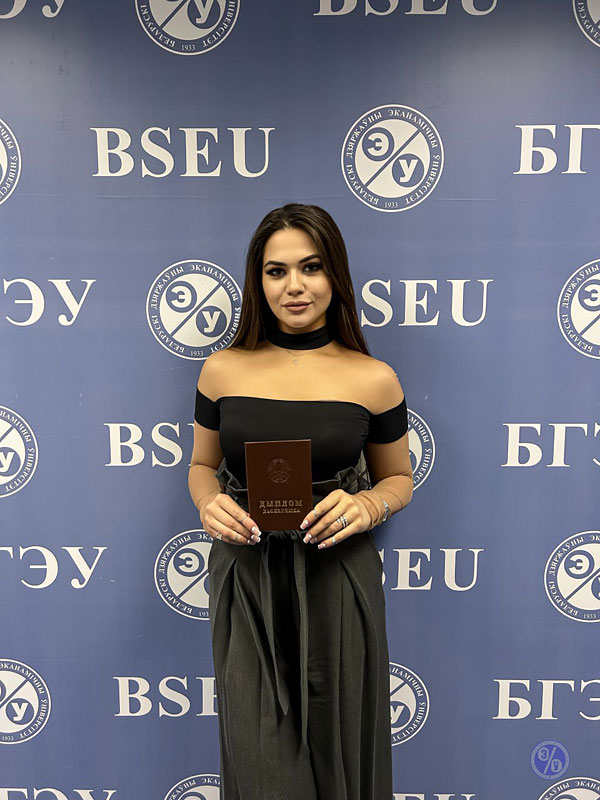
Many are accustomed to thinking that ideological work entails strict regulations and conservatism. But when a 27-year-old educator takes over as Deputy Dean of the Faculty of International Economic Relations, the rules of the game change. Ekaterina Iosko is a shining example of a new generation of leaders who speak the same language with students, are unafraid of ambitious challenges, and know how to make educational work truly vibrant. Read our interview to learn about what it's like to oversee one of the country's most prestigious faculties at a young age and where to find common ground with today's Generation Z.
— You graduated from BSEU and immediately stayed there. Was this a conscious choice from your student years, or was it a fortunate coincidence?
"It wasn't really a single choice, but a chain of internal decisions that gradually led me to where I was so eager to go. I'd truly dreamed of being a teacher since childhood: I loved explaining and sharing. So, when I enrolled in the Faculty of Law at BSEU, I already intuitively knew that I wanted to connect my life with the university environment.
Thanks to the faculty at the Faculty of Law, the learning process became more than just a routine for me, but an event that shaped me as a person and a professional. I became increasingly involved in research, and I enjoyed learning new things. And at some point, I realized that the university had become more than just a place to study, but a space where I could grow, contribute, and realize my potential."
"Do you remember your first day as a teacher? What was it like walking into a classroom with students just a couple of years younger than you?"
"Yes, I remember my first day very well. It was a combination of excitement and responsibility, but also an amazing inner upliftment." When you open the classroom door and see students just a couple of years younger than you, you feel like you're straddling two roles: yesterday a student, now a teacher, looked at with anticipation.
Yes, the age difference is minimal, so I needed to be an authority through knowledge, respect, and the ability to explain and listen.
But at the same time, I felt a surprising sense of confidence, because I was teaching my favorite subject, Forensic Science. This gave me a boost: I knew I could convey it in a way that would engage the students as well.
That first day marked the point where I was confident I'd chosen the right path.
— Many graduates of the Faculty of International Economic Relations (FIE) aspire to business or large corporations. Why did you choose academia and public service within the university?
— The academic path was natural for me: I've always been drawn to science, the opportunity to impart knowledge to students, and to develop myself. The university environment has always given me a sense of meaning and development, and teaching gives me the opportunity to see the results of my work in my students.
Working at a university is a great responsibility. It's rewarding to see that after graduating, those who were just sitting with their textbooks are now in respectable positions tomorrow, and I'm glad that I had a role in this, even if only in a small way. Therefore, this became much more important to me than a corporate career.
— How difficult was it to rebuild relationships with former professors when you became their colleague and later their manager?
— The transition from being a graduate to being their colleague was very natural for me. I always treated my professors with great respect, and when I became their colleague, I simply maintained this foundation, adding more professional responsibility.
When I later took a leadership position in the Faculty of International Economic Relations, this made things a little easier.
Nevertheless, the experience of interacting with my mentors helped me build civil, respectful, and constructive relationships in my new management role.
Becoming the vice dean of such a prestigious faculty at 27 is a major challenge. What was the most challenging and enjoyable part of this job?
Becoming the vice dean at 27 was truly a significant challenge. The hardest part was quickly taking on a wide range of management responsibilities and learning to make informed decisions. And the most rewarding part was seeing how your work truly helps students, supports colleagues, and contributes to the faculty's development.
What does a typical day for the vice dean of the Faculty of International Economic Relations consist of? Is there room for creativity in bureaucratic processes?
The workday of the vice dean for ideological and educational work is a combination of management tasks, working with students, and coordinating faculty processes. Despite the bureaucracy, there is always room for creativity: in new projects, in approaches to communication, and in finding solutions that make the faculty's life more convenient and modern. In this sense, creativity is not the opposite of administrative work, but an essential part of it.
— The Faculty of International Economic Relations has always been considered "elite." What qualities should a modern student in your faculty possess to be successful?
— A modern student at the Faculty of International Economic Relations must combine academic discipline, flexible thinking, and a commitment to continuous development. Our faculty is international in nature, so openness to new cultures, the ability to work in a multicultural environment, and proficiency in foreign languages are essential. But equally important are initiative, responsibility, and leadership skills. These are the qualities that enable our students to be competitive and confident in a global environment.
— What key changes are you planning (or have you already implemented) in the life of the faculty in your position?
— As Deputy Dean for Ideological and Educational Work, I focused on making the student environment more open and vibrant. We updated our methods of communication with students, supported their initiatives, and expanded the format of events—from educational to volunteer—aimed at developing civic engagement, professional culture, and involvement in the life of the faculty. Our close-knit team is currently developing new platforms for dialogue and international projects to make the faculty feel even more modern, friendly, and truly student-centered. The most important thing in this regard is that educational work is not a formality, but a real tool for shaping an active, thoughtful, and responsible community.
— Does the small age difference make it easier for you to find common ground with students, or do you have to maintain a stricter distance to maintain your authority?
— The small age difference really helps us find common ground with students more quickly. We share a similar informational environment and are more attuned to modern communication formats. At the same time, I always maintain professional boundaries: respect, clear rules, and responsibility are important in any social role. We can communicate openly and humanely, but at the same time, everyone understands their role and area of responsibility.
— What problems do students most often come to you with as the Deputy Dean?
— Students most often come with questions related to their studies, schedule, and adaptation. Students often seek support in difficult situations—from organizational misunderstandings to personal struggles. In such moments, it's important for us, the Faculty of International Economic Relations (FMEO), not only to resolve the issue but also to create a sense that the student is not alone, that they are heard, listened to, and supported.
— How have students changed over the years you've been at BSEU? Do you feel a difference between your generation and current first-year students?
— Students have become more aware and independent over the years. They navigate information more quickly, are more bold in trying new things, and are more open about what's important to them. The generational difference is palpable, but it's actually inspiring: their energy and fresh perspective make university life more dynamic and interesting.
— What do you consider most important in teaching: the transmission of hard skills or the development of personal development?
For me, these things don't compete. Hard skills give students professional support, while personal development provides the ability to apply knowledge responsibly and humanely. True education occurs when these two components work together.
— What languages, besides English, do you recommend current MEE students learn?
— It all depends on your interests and future specialization, but I most often recommend learning Chinese, as it's the most popular language internationally.
Ideally, you should choose a foreign language that truly inspires you, because motivation plays a key role in learning.
— How do you manage to maintain a work-life balance with such a heavy workload?
— For me, balance means being able to switch gears at the right time. During busy periods at work, I simply try to stay focused. And as soon as I have free time, I make sure to devote it to family, relaxation, or whatever helps me recharge. It's not about a perfect schedule, but about small habits that recharge my batteries.
— If you could go back to being 17, when you were just applying to BGEU, what advice would you give yourself?
— I'd probably tell my 17-year-old self what great scientists have often said: don't be afraid of curiosity and don't be embarrassed by mistakes. Albert Einstein said, "I have no special talents. I am simply passionately curious." I would definitely advise myself to maintain this feeling, even when it's scary.
And since I'm a graduate of the Faculty of Law, I'd also like to mention Oliver Wendell Holmes Jr., one of the most influential lawyers and professor, who noted, "The life of law has not been logic—it has been experience."
So: try, make mistakes, learn, don't be afraid to be bold. Everything that matters comes through personal experience and a willingness to grow.
— Describe the Faculty of International Economic Relations in three words.
— M-motivating
E-expert
U-unifying.
— Complete the sentence: "For me, BSEU is..."
— For me, BSEU is an important part of my life, where I grew as a person and as a professional.
These are my first steps in law. My journey from studying at the Faculty of Law, completing my master's degree, doctoral studies, and, of course, teaching, to my current position as Deputy Dean.
It's been ten years filled with ideas, discoveries, and the feeling that I'm doing something important. BSEU is where I found my calling and my community, and it remains my professional home. It's a growth hub for which I always feel deep respect and gratitude.
— Where do you see yourself in 10 years?
— In ten years, I see myself as someone who continues to develop professionally, contributes to the university and its students, and remains true to my values.
I want to remain in education, but at a level where I can influence strategic decisions, create and develop new projects, and help young professionals grow. At the same time, it's important for me to maintain what has already become part of my identity: respect for people, a love of teaching, and a desire to make the environment around me a little better.
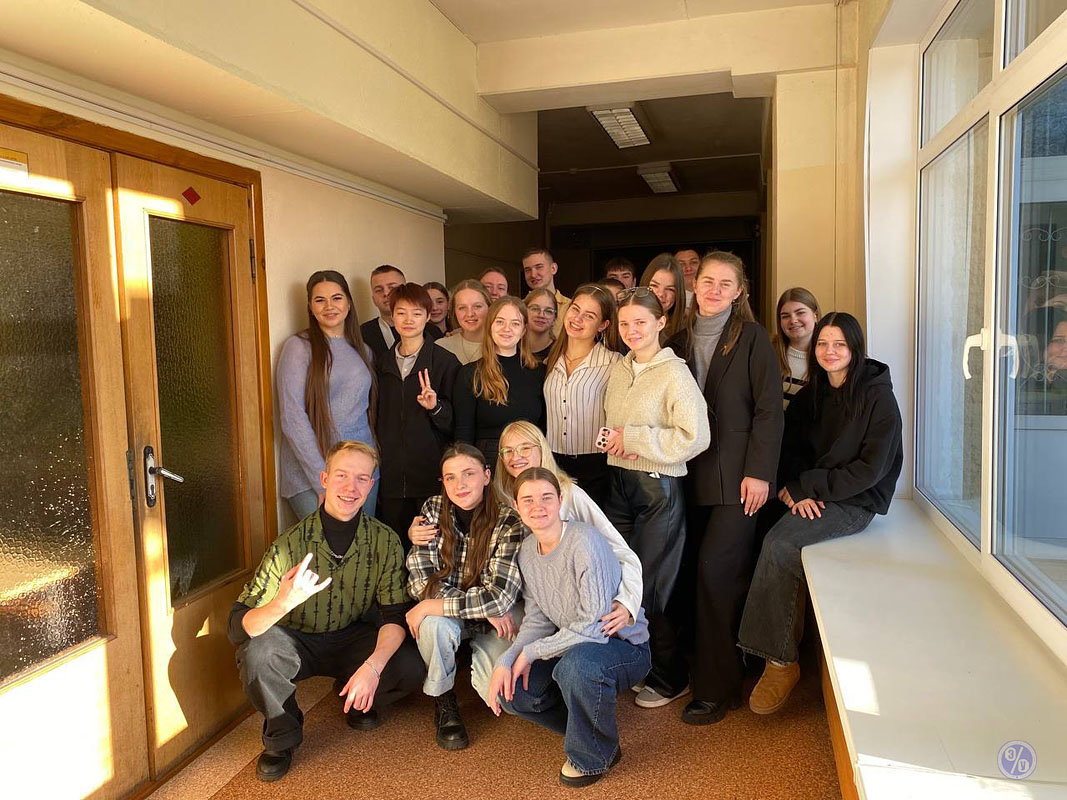
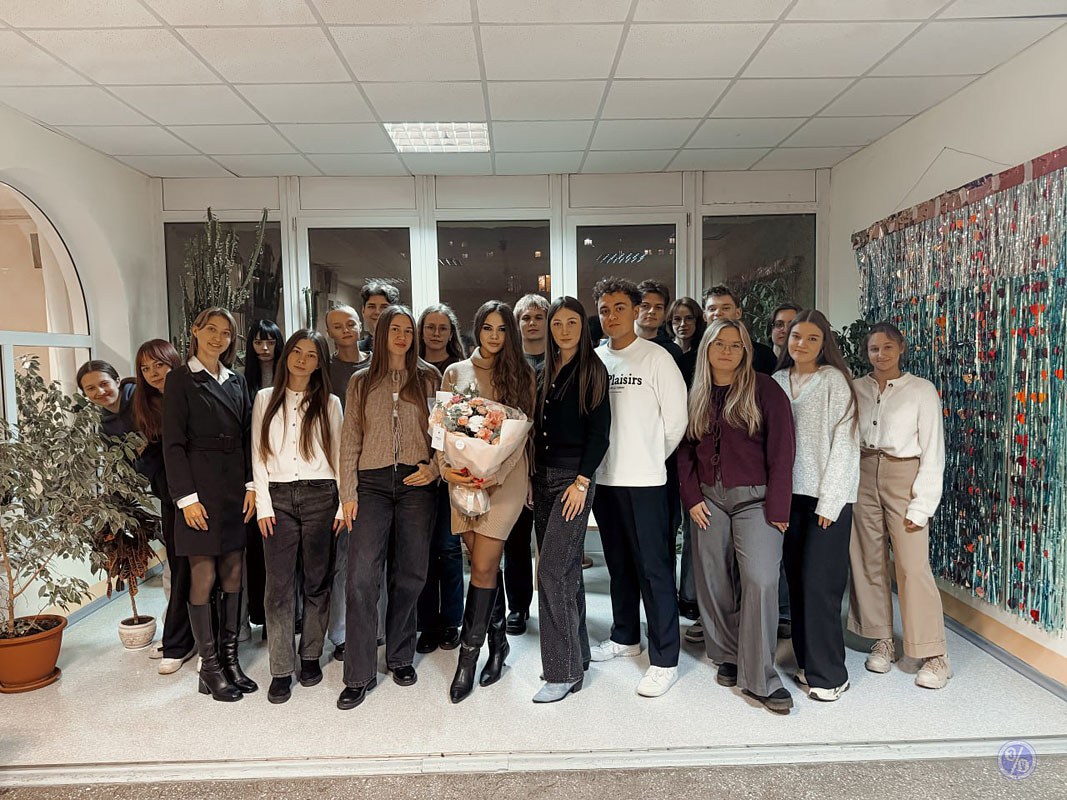


International relations dep.
Tel.: (+375 17) 209-88-32,
e-mail: umoms@bseu.by
International students office:
Tel.: (+375 17) 209-79-71