

1.06 .2026
State Support and Personal Happiness. BGEU Associate Professor Inga Sharapa on the Role of Family and Children's Day
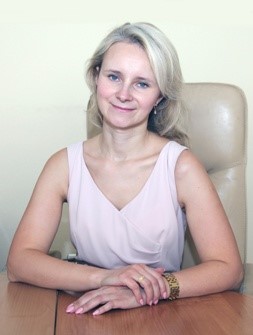
How do you juggle lecturing on international economic law, pursuing research, and remaining a loving mother to four children? On International Children's Day, we met with BGEU Associate Professor and PhD in Law Inga Sharapa. In a candid interview, Inga Alexandrovna shared her personal experience of raising many children, discussed family traditions, and offered valuable advice to students planning their lives and careers.
— Inga Alexandrovna, you are an Associate Professor in the Department of Civil Law Disciplines—a complex field requiring constant concentration, knowledge updating, and research. At the same time, you are a mother of four children. How do you manage to combine these two energy-intensive roles?
— A woman's fulfillment is a combination of her creativity, desires, and potential. Every woman has her own perspective: some find their fulfillment in the family, others in the professional field. In my opinion, the most important thing is the harmonious development of he individual. Priorities vary at different stages of life, depending on a person's desires and inner needs.
— Do you have your own golden rules of time management? How do you allocate 24 hours a day so that you have enough time for lectures with students and for each child at home?
— The main secret is simply to love your family, love what you do, think positively, and be proactive—then you'll get everything done.
— Does your legal background help you in raising your children? Does your family have its own "constitution" or internal set of laws and agreements that everyone strictly adheres to?
— The family plays a key role in achieving demographic stability and preserving the country's sovereignty and independence. Strengthening the status of the family and traditional values, supporting motherhood, fatherhood, and childhood are national priorities for Belarus. Promoting family values requires a systematic approach and the participation of each of us. The more positive examples, support, and attention given to the family, the stronger society becomes and the more resilient the country's development. The classic model of family with children should remain an unwavering way of life for Belarusians.
— Our interview is timed to coincide with International Children's Day. How do you—both as a mother and as a lawyer—articulate the meaning of this holiday? What, in your opinion, is the most important thing for children to be protected from in the modern world?
— International Children's Day is not only a joyful holiday for children themselves; it is also a reminder to society of the need to protect children's rights so that all children can grow up happy, study, pursue their passions, and become wonderful parents and citizens of their country. Caring for the future generation is an essential component of any nation's development. Population growth, high-quality education, and thoughtful upbringing lay the foundation for economic and cultural development. In Belarus, numerous projects and events are held to mark International Children's Day. This is not surprising, as child protection is one of the country's top priorities. Today, Belarus has a vertical system for working with children, coordinated by the National Commission on Children's Rights at the level of government agencies and for assessing the situation in the area of children's rights.
— Tell us a little about your children. What are they like? What are their hobbies, what are their aspirations? Do any of them show an interest in law or economics?
— Your eldest daughter graduated from medical school and works as an obstetrician-gynecologist at the 6th City Clinical Hospital, while another daughter became a teacher of Chinese and English. My eldest son dreams of pursuing a career in law. My youngest plays for the Shakhtar hockey club. I am very proud of my children's achievements.
— What's the main tradition that unites your large family? How do you spend weekends and holidays together?
— Our family's main tradition is Sunday dinners together, and, of course, holidays. Around the table, we share news, solve problems, summarize progress, and give advice. This allows everyone in the family to feel important and valued.
— Does your experience as a mother help you in your work with students? Have you become more lenient or, conversely, more demanding of young people as your own children have grown up?
— It's hard to say, of course, but I think I'm much stricter with my children and demand much more. I teach them to always see things through to the end, to achieve results, to strive to be the best in their profession, and to never rest on their laurels.
— Have you noticed that your parenting methods help you in your teaching practice with students (or vice versa)?
I treat my students like my own children, giving them advice and trying to nurture their individuality.
— Many modern students and graduates are afraid to start families, fearing it will hinder their careers and academic fulfillment. What would you say to them, based on your own experience? Is it really necessary to choose between self-fulfillment and a large family?
— Choosing between self-fulfillment and a large family is extremely difficult. These are two different, yet equally important forms of human development, where family provides the emotional component (unconditional love, support, a sense of security), while self-fulfillment involves achieving personal goals.
— What is your main advice as a mother and teacher: how to raise a child to be self-sufficient, successful, and happy?
The main secret lies in unconditional love, allowing the right to make mistakes, and creating the conditions for independent decision-making.


International relations dep.
Tel.: (+375 17) 209-88-32,
e-mail: umoms@bseu.by
International students office:
Tel.: (+375 17) 209-79-71